
Cat scattering litter everywhere?

Does your cat regularly leave litter around its tray and even in adjacent rooms? This is a very common phenomenon. Grains can get stuck under its paw pads, be projected when it scratches, or simply follow its first steps after exiting.
It's not necessary to completely disrupt its habits to improve the situation. A suitable tray, regular maintenance, and a dedicated exit area can already significantly reduce daily scattering.
1. Understand how litter leaves the tray
Some of the grains can cling to the paw pads or fur between the toes. As your cat moves away from the tray, these grains gradually fall off and scatter along its path.
Some cats also project more litter when they vigorously scratch to cover their waste. This behavior is natural, but it can become more noticeable when the tray is small, very full, or surrounded by a floor on which grains roll easily.
Observe the path your cat takes when it exits the tray. This precise area is where your arrangements will be most effective.
Once the path is identified, start by checking that the tray offers enough space for your cat to enter, turn around, and scratch without unnecessarily scattering litter around it.
2. Adapt the tray to the cat's size and habits
A tray that is too narrow forces the cat to turn around with difficulty and brings its movements closer to the edges. When it scratches, the litter can then be projected more easily outside.
The tray must remain spacious and accessible. Adapted edges can help contain projections, without making entry difficult, especially for a kitten, an elderly cat, or an animal with reduced mobility.
An open litter tray also allows for a clear and easy-to-monitor space, provided its dimensions and edges correspond to your companion's habits.
3. Find the right balance between comfort and scattering
Very fine or particularly light litters can adhere more easily to paws and travel further around the house. Conversely, a less volatile texture can limit this phenomenon, but it must always remain comfortable and well-accepted by your cat.
Also, avoid filling the tray to the brim. Too much litter leaves less room when your cat scratches and promotes scattering. Instead, maintain a consistent level, sufficient for it to cover its waste without displacing a large amount of material.
If you want to try a different litter, transition gradually by mixing the old and new. A sudden change could disrupt your cat's habits.
4. Maintain regularly without overfilling the tray
When soiled areas accumulate, some cats scratch longer to find a suitable spot. These repeated movements can increase the amount of litter projected outside.
Regularly remove waste and only add the necessary amount. The goal is to maintain a stable level rather than constantly adding litter without removing what needs to be removed.
A self-cleaning litter tray can facilitate this maintenance for some households, while maintaining a more consistent space between two full cleanings.
Take advantage of cleaning to also remove grains present under the tray and around its edges. Otherwise, they can be moved every time your cat passes.
Intercept grains right at the tray's exit
Placed in the actual path your cat takes, a sufficiently wide exit area helps collect some of the grains before they continue their journey into the house.
The Animalyo Cat Litter Mat is placed in front of the tray to accompany your companion's first steps. It helps retain grains under its paws and makes it easier to empty the collected litter during maintenance.
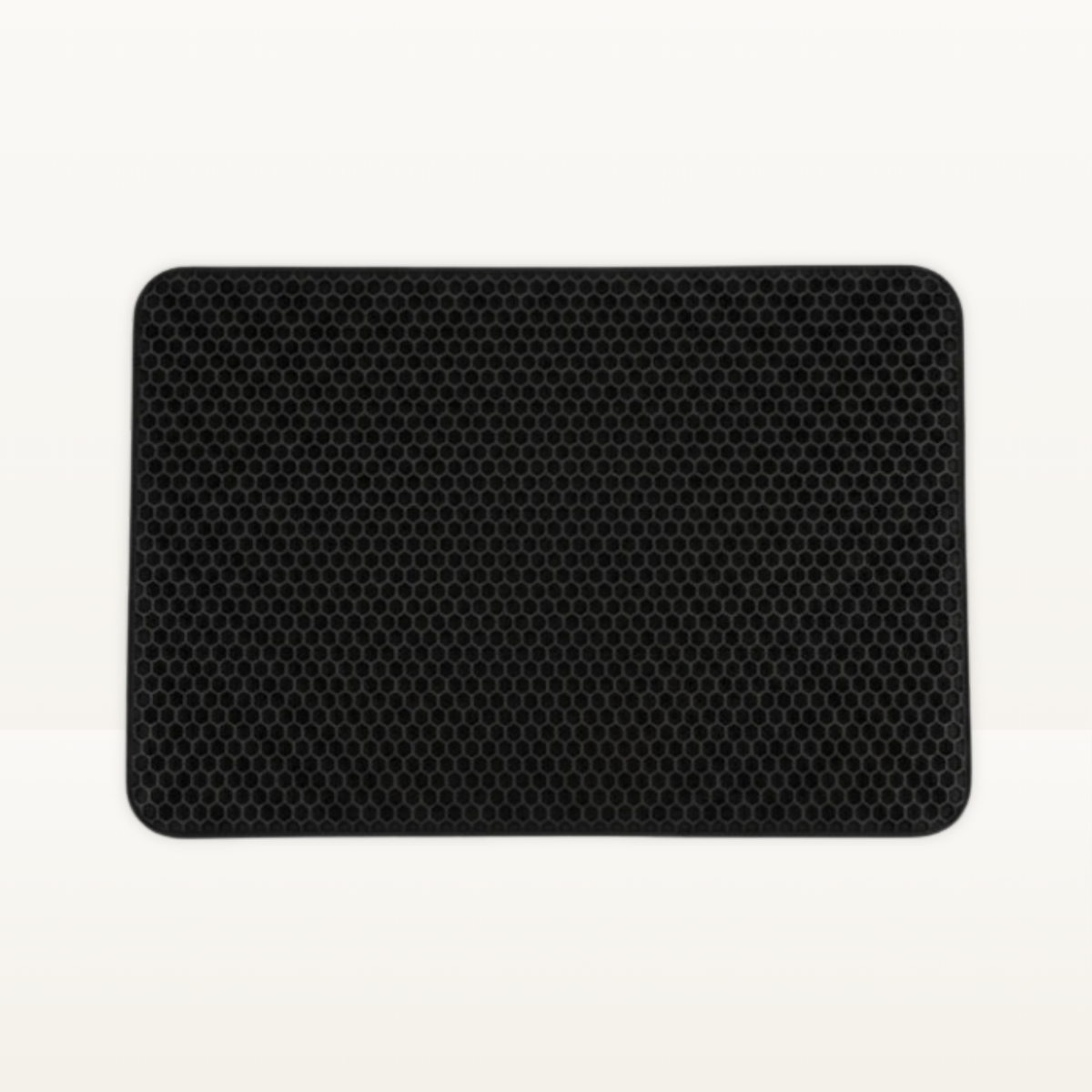
A well-placed mat will be much more effective if your cat can calmly exit the tray and walk on it without having to go around it or jump directly further away.
5. Arrange a simple and clear exit path
The tray should be in a quiet, accessible, and spacious enough location to allow your cat to exit without rushing. A too-narrow space can encourage it to jump over the mat or take another path.
Lay the mat flat, directly in its exit axis, without completely trapping it under the tray. Your cat should be able to take several steps on it before reaching the room's floor.
Finally, avoid regularly moving the tray or abruptly changing its environment. A stable and predictable space facilitates the adoption of good daily routines.
Key takeaways
Create a more pleasant litter area
Discover our accessories designed to simplify home maintenance and preserve a pleasant space for your cat and your household.